I’ve always been interested in space. When I was 12 I bought my first telescope and, shortly before the Moon landings, I even gave a school presentation about the Moon. The cheap telescope turned out to be a poor choice—fortunately I was able to return it to Anttila. In the 1960s, and perhaps because of other hobbies too, observing the sky wasn’t easy: in warm seasons the sky stayed too bright, and in autumn and winter the weather steadily eroded motivation. Maybe I simply never met the right mentor.
When retirement began, I decided to make one last serious attempt at amateur astronomy.
So in April 2019 I took my first steps: I compared amateur telescopes, installed astronomy apps on my computer and iPad, and looked for a good observing spot nearby. I also explored how to use my DSLR (Canon EOS 600D) for imaging. Smartphone cameras had made me neglect the DSLR, but I quickly got the feel for it again.
Unfortunately the timing wasn’t ideal because of the brightening spring nights.
Then I joined the Slooh community, which uses remote observatories, and finally got to explore space for real. Through that I learned how amateurs can help professional astronomers by monitoring the brightness variations of variable stars. That led me to join the AAVSO (American Association of Variable Star Observers). Even now I receive data a couple of times a week from SS Cygni. I’ll tell more about that another time.
And of course I became a member of Ursa and Etelä‑Karjalan Nova— which is why, Dear Reader Interested in Space, you’re reading this. I’ve actively taken part in Nova meetings and Ursa’s hobbyist seminars; nowadays they are conveniently streamed, so there’s no need to travel.
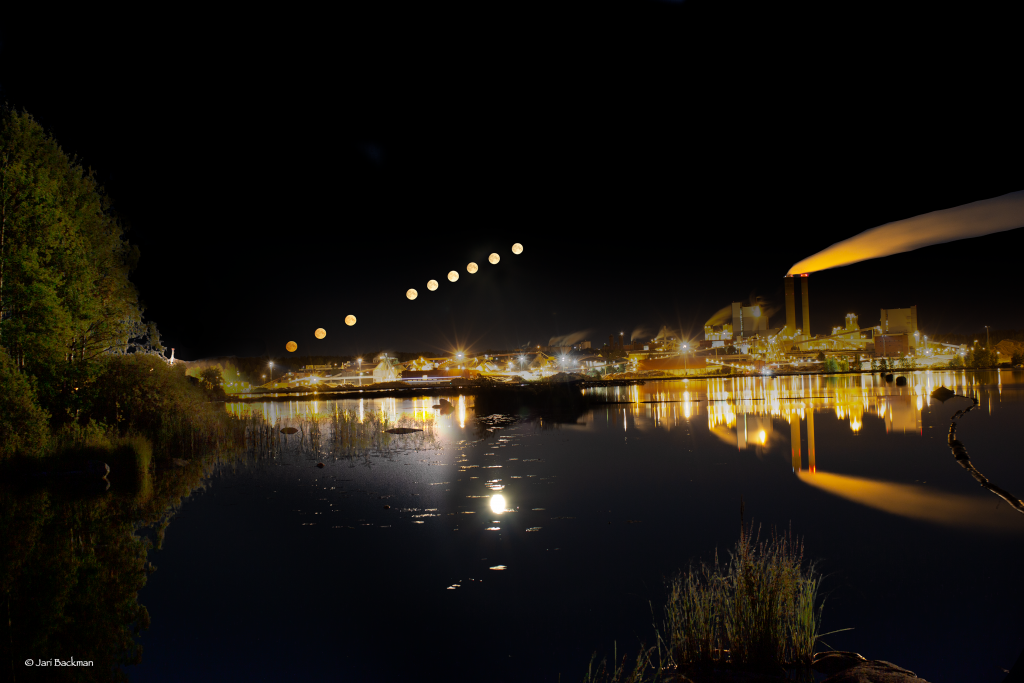
As a “Trainee” at Slooh’s Night Photography Club, (September 2020) I figured out that near the Pappilansalmi ferry you can see the Moon rising in the east above the Kaukaa factory. So I took my camera to the right spot and snapped frames every few minutes as the Moon rose—and it truly felt enchanting. You probably noticed the picture earlier on this page.
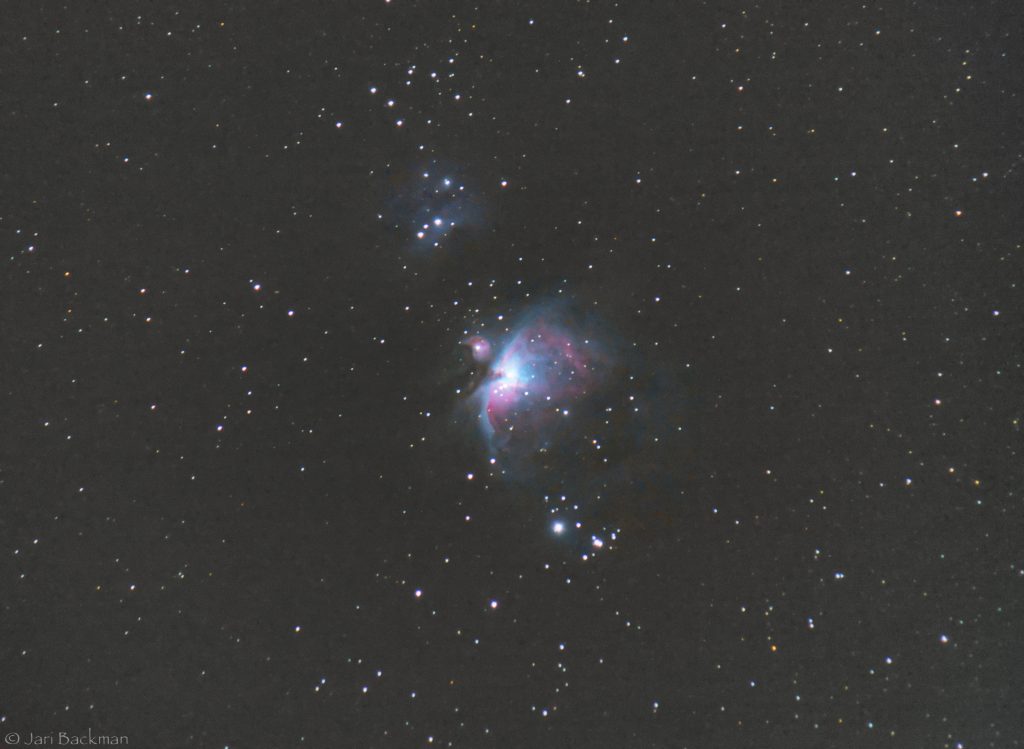
At the end of last year I also dared to try a small deep‑sky project with my camera in the darkness of Konnunsuo. My plan was to photograph the Andromeda Galaxy, but it was so close to the Zenith overhead that I couldn’t frame it properly.
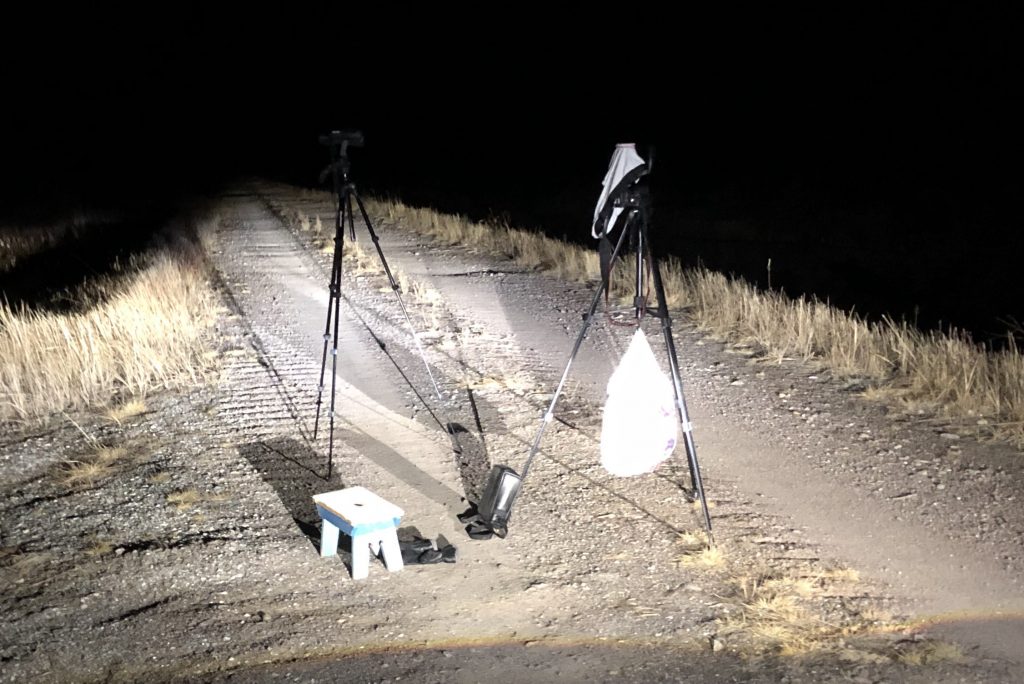
To my surprise, Plan B—imaging the Orion Nebula—worked, and all 603 frames are still safely on my camera at home.
In late spring I also borrowed Nova’s 102 mm Sky‑Watcher telescope. I didn’t have much time to image deep‑sky targets once the night sky became brighter, but I made many lunar observations for Taivaanvahti. As the highlight of the summer, I photographed a partial solar eclipse despite the clouds. If you look very carefully at the telescope, you’ll notice I managed to attach my camera directly at the telescope’s focal plane.
And before returning the telescope, I added a solar filter to the telescope’s accessory set for our members to use.

I also visited the astronomy class of Kesämäki School to demonstrate imaging the sky, and I was genuinely touched by the pupils’ interest. So there’s plenty to do from week to week—no risk of my brain going “mossy”. And no fear of running out of topics when it comes to space.