When I joined Etelä‑Karjalan Nova almost five years ago, I already had some experience in astronomy. But I did not yet realize how strong a tradition there is in variable‑star observing — both globally and also in our club.
Over the past few years my main target has been the constellation Cygnus. One of the most interesting objects there is SS Cygni, discovered in 1896.
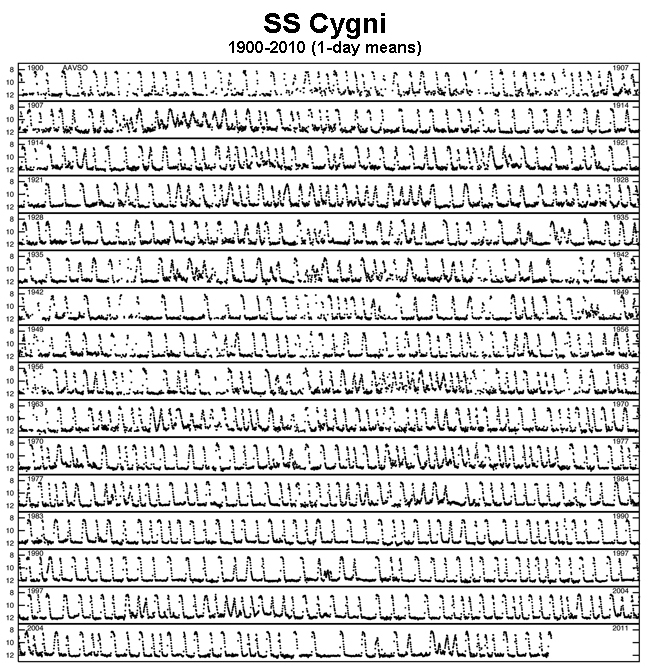
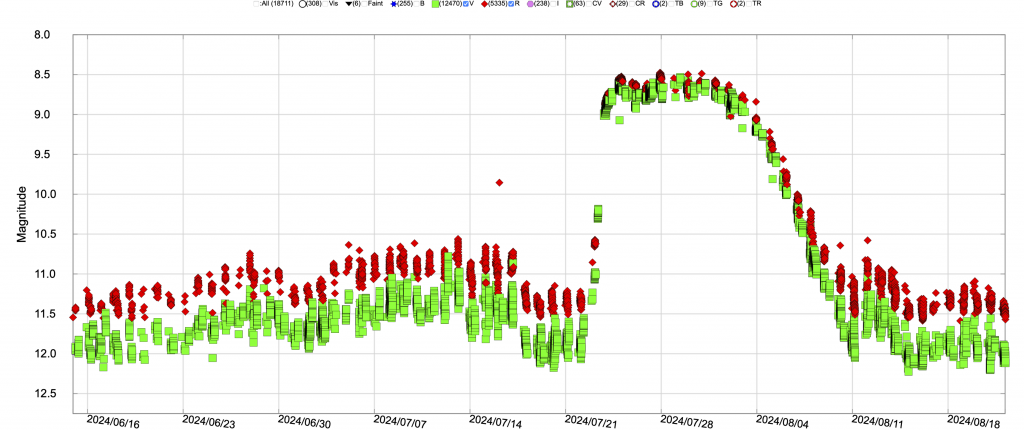
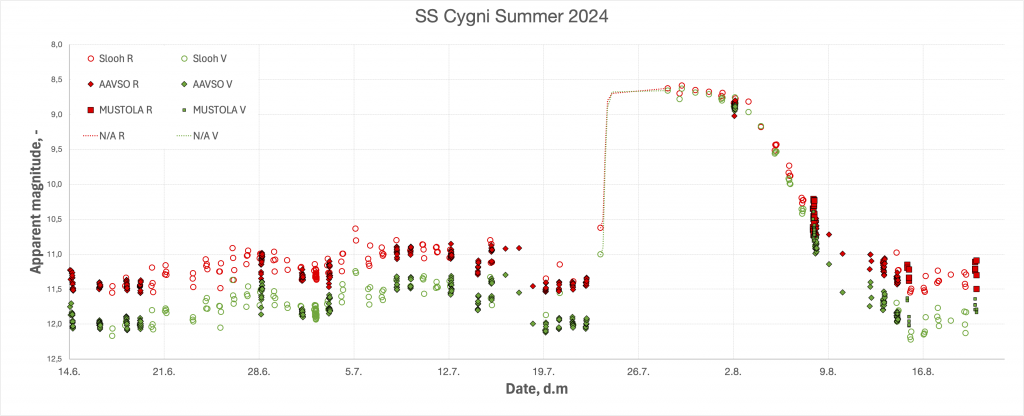
SS Cygni is a cataclysmic variable: a close binary system where a white dwarf accretes material from a companion star. The system undergoes recurring outbursts, brightening from about magnitude 12 to around magnitude 8. The rise can happen quickly (1–2 days), and outbursts typically repeat on a timescale of several weeks.
Because SS Cygni has been monitored for over a century, the light curve is extremely well documented. The outbursts do not follow a perfectly regular cycle, but their statistics and typical patterns are well known.
SS Cygni is also relatively close in astronomical terms. Its distance estimate has improved over time; modern values place it a few hundred light‑years away.
Historically, variable stars were often followed visually. Today, with digital imaging and remote telescopes, it is much easier to collect consistent data — and you can do it even when local weather is not cooperative.
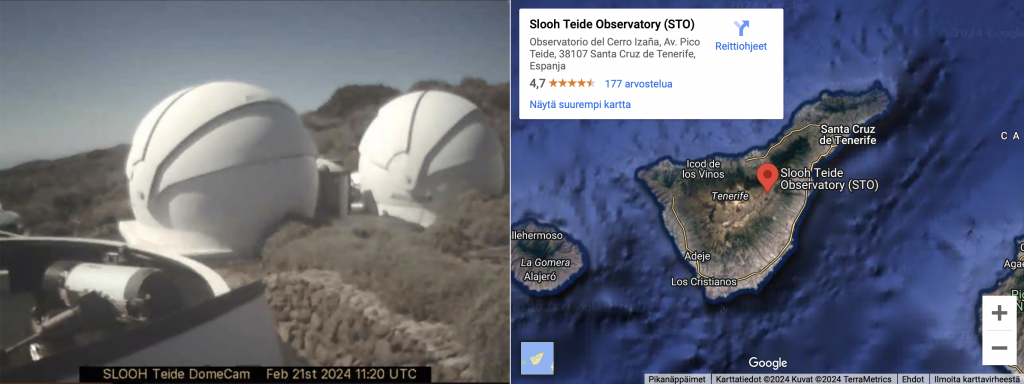
For my monitoring I have used the Slooh network of remote telescopes in the Canary Islands, Chile and Australia. Slooh has multiple instruments available, and I can reserve observing slots to build a time series.
For SS Cygni I often use one of the Canary telescopes. The field of view is about 43 arcminutes across, and the data quality is good enough for reliable photometry.
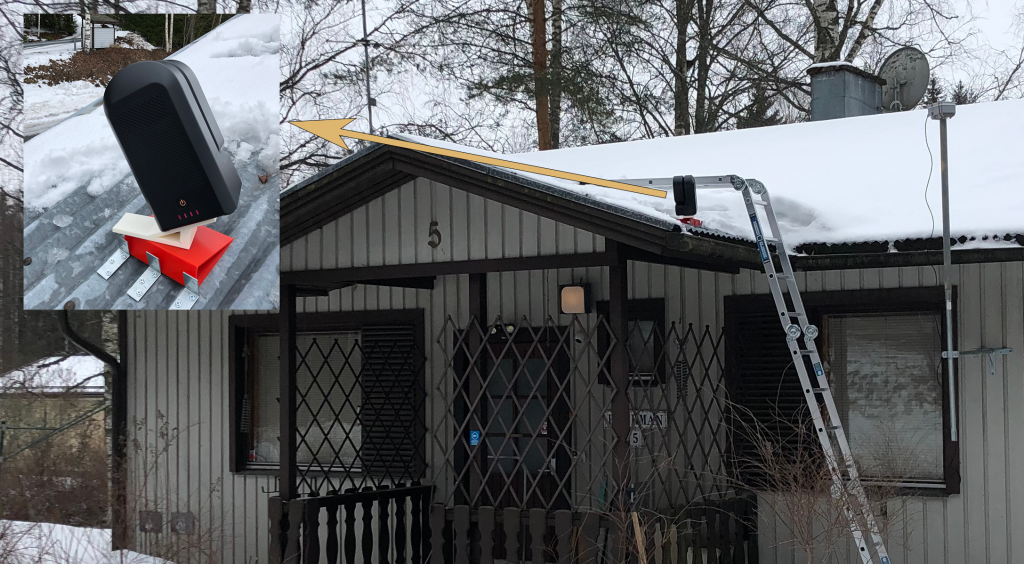
I submit my measurements to the American Association of Variable Star Observers (AAVSO) — I also joined as a member and have an observer code there (BJAK).
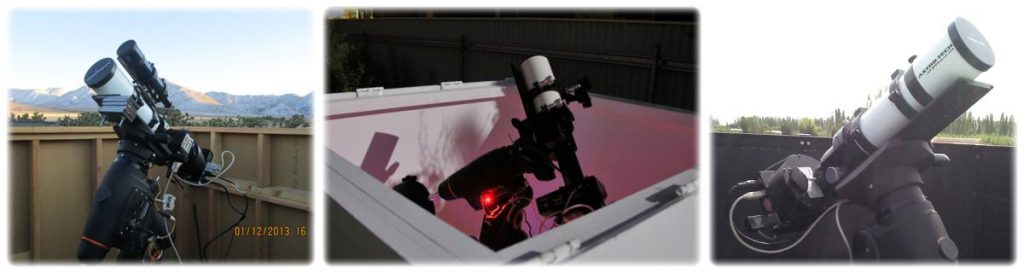
More recently SS Cygni became part of AAVSO’s more intensive monitoring program, and I applied for access to the BSM (Bright Star Monitor) stations that AAVSO members can use.
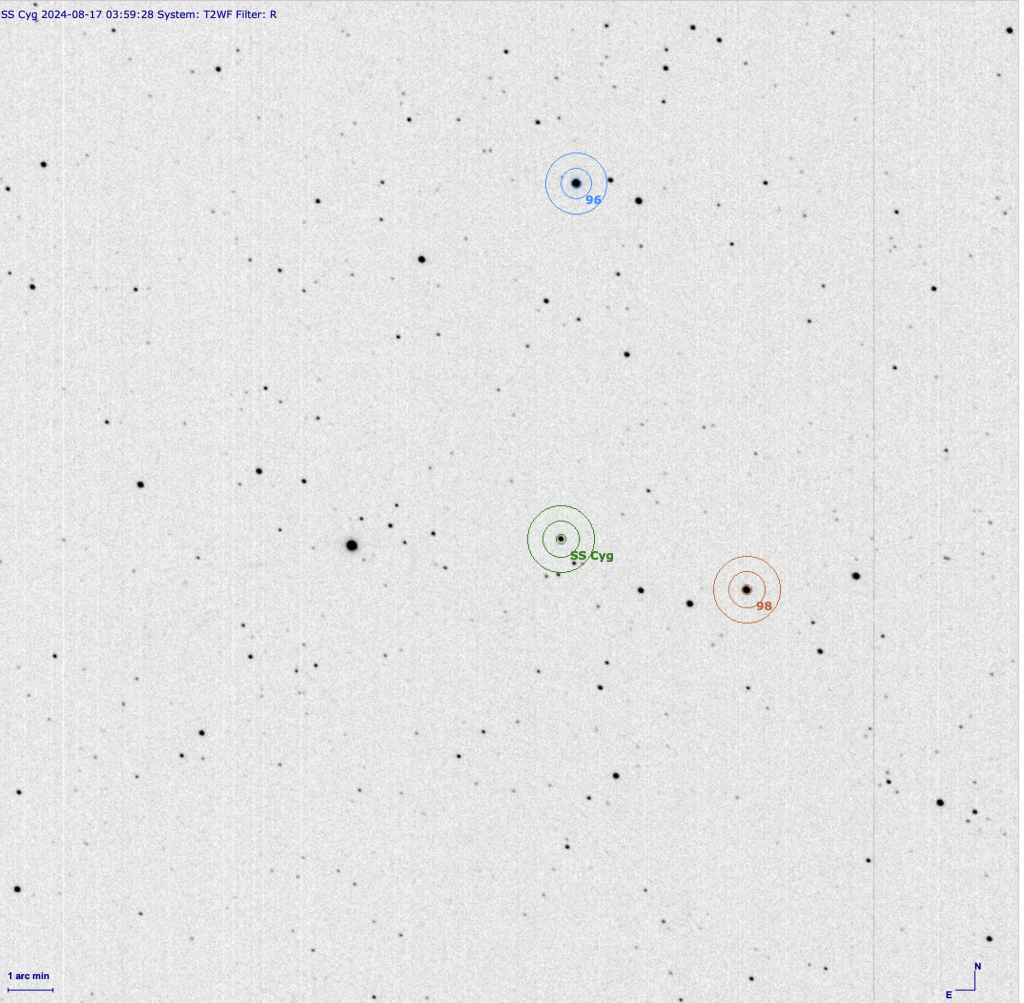
As a result, I received a six‑month access period to BSM telescopes in Hawaii, New Zealand and South Africa. With these, I managed to collect on the order of a few hundred observations. The BSM field of view is wider (about 90 × 60 arcminutes), which helps with comparison stars.
Variable‑star monitoring is a satisfying blend of science and hobby: the observations are approachable, but they also contribute real data. And the long historical record means your measurements become part of a much larger story.