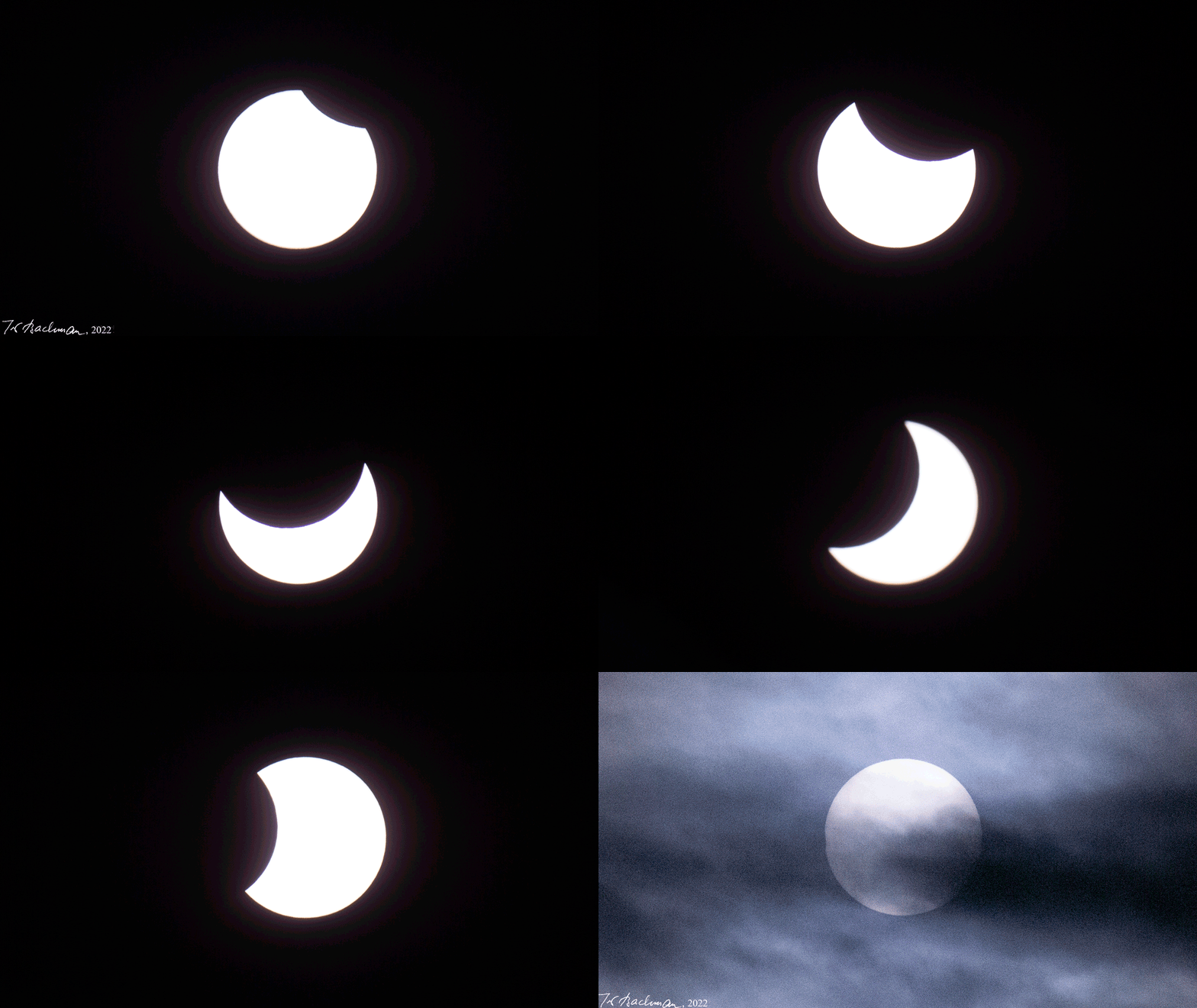
We were lucky to get a second partial solar eclipse within a year and a half. The best part: the forecast promised sunshine, and the sky really was almost cloudless.
I quickly walked to a suitable spot on our home street and started recording the eclipse. I set up my Canon EOS 600D to take images roughly every two minutes.
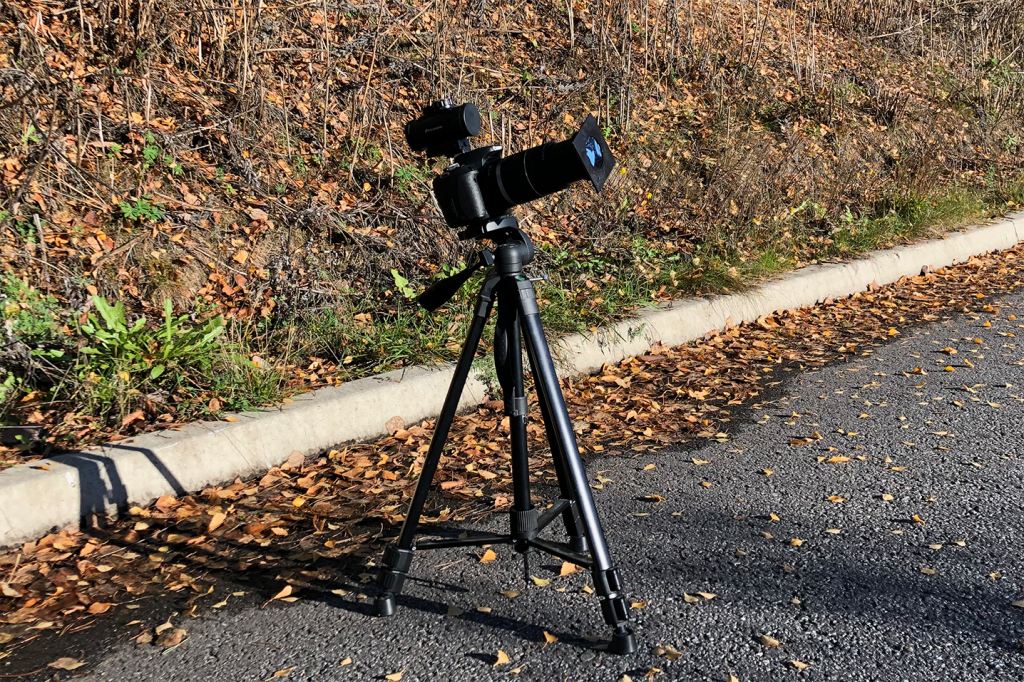
As a filter I used a Baader AstroSolar Safety Film (ND 5.0) ordered from Ursa. I had previously designed and 3D‑printed a holder for my 250 mm telephoto lens, so mounting the filter was quick and secure.
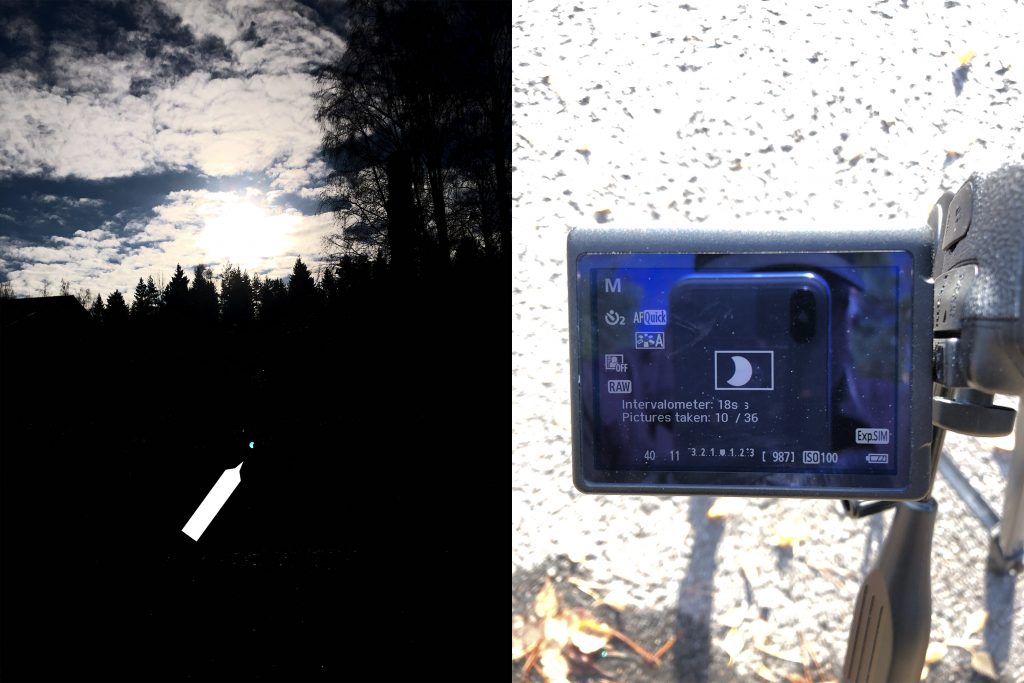
I had installed the Magic Lantern software on the camera’s memory card, which made interval shooting easy. Even with automation, I still had to keep an eye on framing and exposure as the Sun drifted and the light changed slightly.
Shooting in the crisp autumn air was a pleasure. Near maximum eclipse there were thin clouds at times, but they were light enough that I could still keep the Sun safely in frame and continue the time‑lapse sequence.
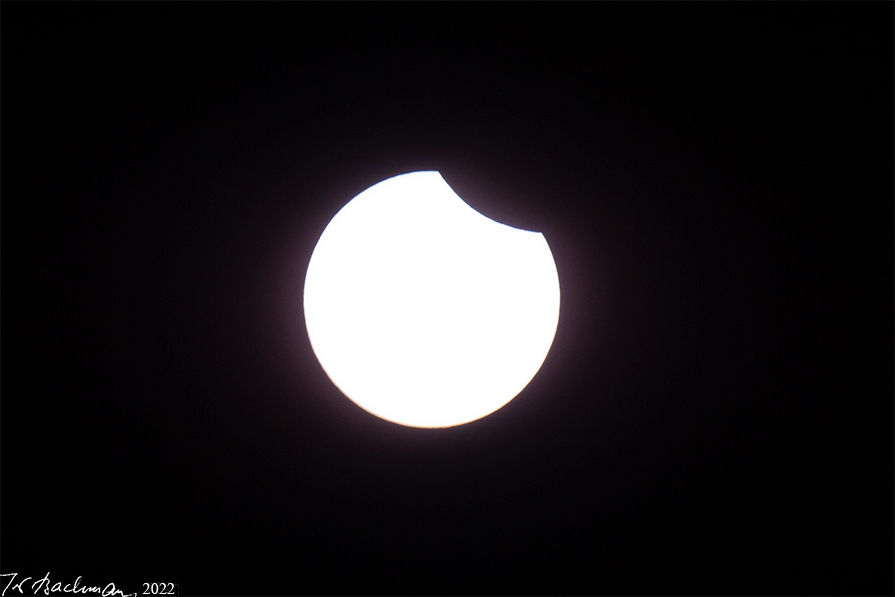
Just before the maximum phase I also took a few “single shots” to capture sunspots. In the image you can see several active regions (AR3126, AR3130 and AR3131), and the rough limb of the Moon is nicely visible against the solar disk.
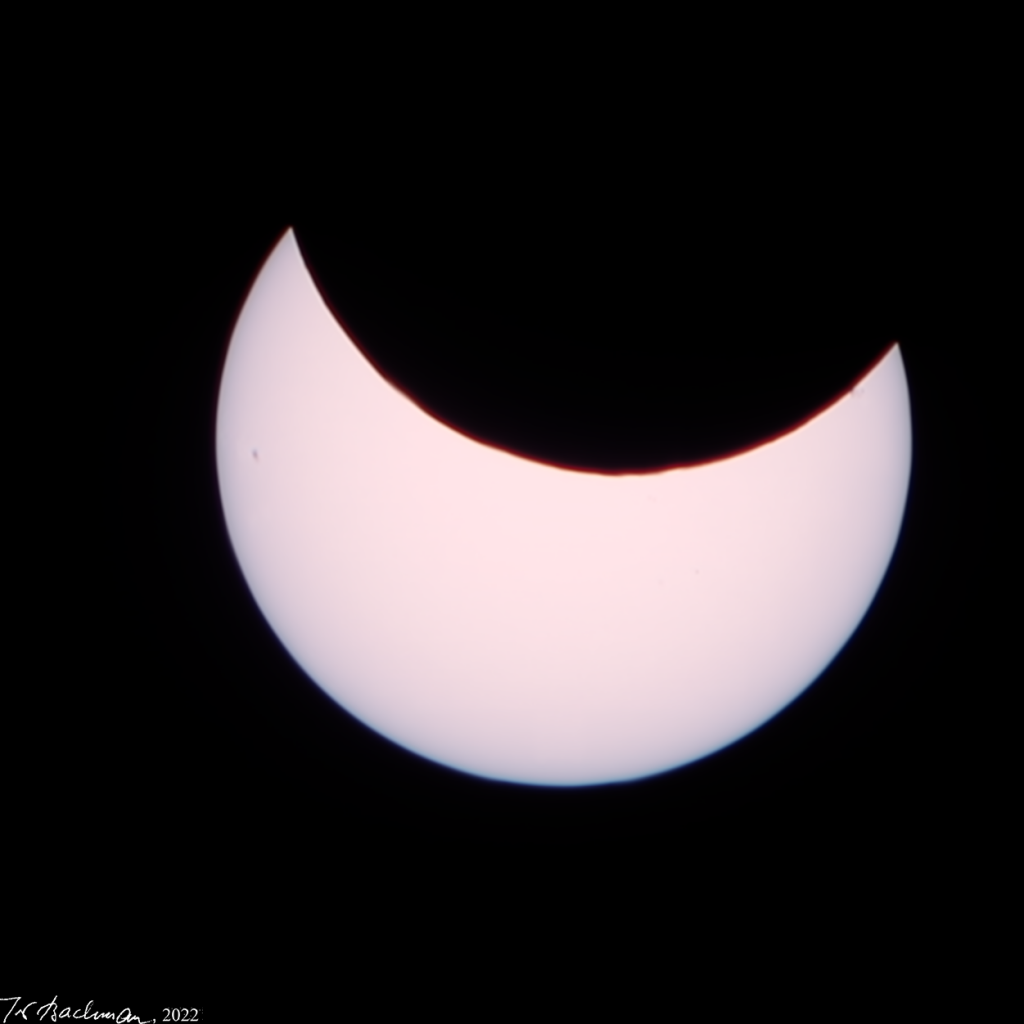
By the end of the eclipse I had 69 frames on the memory card. From these I compiled a simple animation, where the Moon’s motion and curvature are easy to perceive as it bites into the Sun and then slowly moves away.