Among Nova members we discussed buying Bahtinov masks. In the end I decided to make my own, because the mask is simple, useful, and fun to build — and it’s a great example of how a small accessory can noticeably improve astrophotography results.
A Bahtinov mask is placed in front of the telescope or lens. When you aim at a bright star, it produces a distinctive diffraction pattern: three spikes, where the middle spike moves as you change focus. When the middle spike sits exactly centered between the other two, focus is spot on.

What surprised me is how “young” this invention is. The mask was developed by Pavel Bahtinov only about 16 years ago, yet it has become a standard tool for precise focusing.
My plan was to 3D‑print the mask in plastic.
Well, nothing happened for a while, but then I was called back from retirement to work for a few months and I realized that our LUT university has 3D printers in the J.Hyneman center. Yes, the same guy from Mythbusters who was awarded an honorary doctorate from LUT a few years ago.
First I explored the basics of mask geometry and also browsed ready‑made STL models online. Because I wanted two sizes (for a 250 mm telephoto and also for a smaller Canon lens), it made sense to iterate and learn by doing.

I first designed one version and printed it at LUT’s (Lappeenranta–Lahti University of Technology) workshop, which provides 3D printers for students and staff. Printing two lightweight masks (about 5.5 g each) took a few hours, but the fit was excellent: the mask sits neatly inside the lens hood.
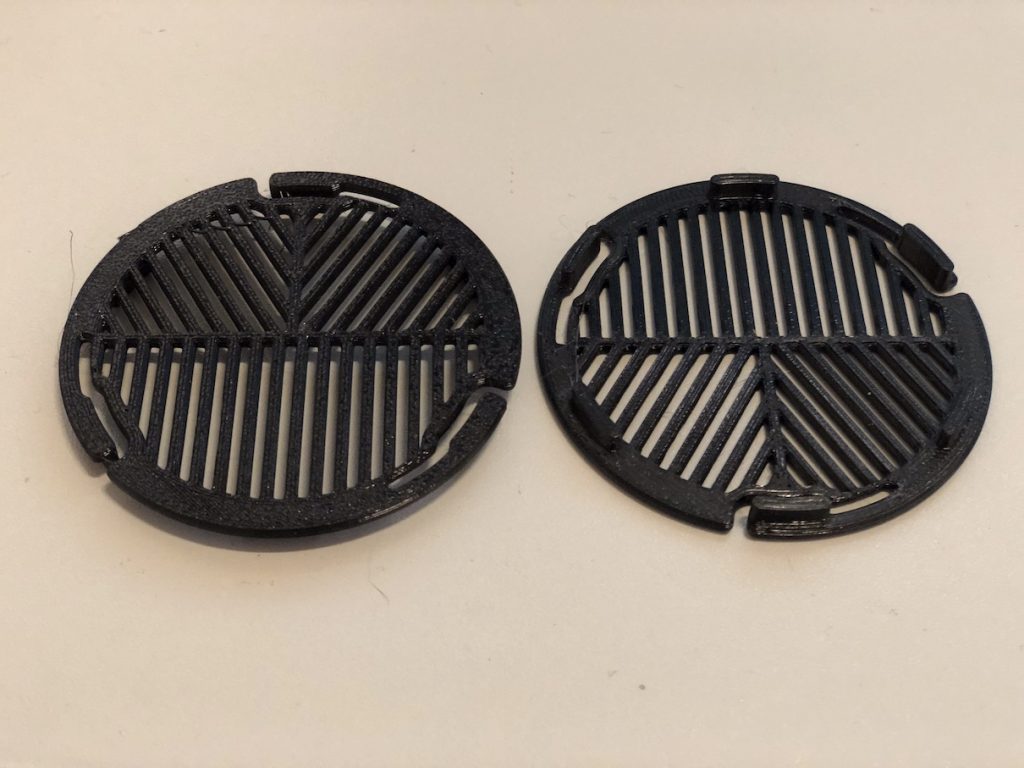
I tested the mask for the first time on Arcturus. In the viewfinder the pattern was faint, but in the camera’s captured image the spikes were clearly visible. The focusing feedback is immediate: the central spike slides across as you adjust focus.
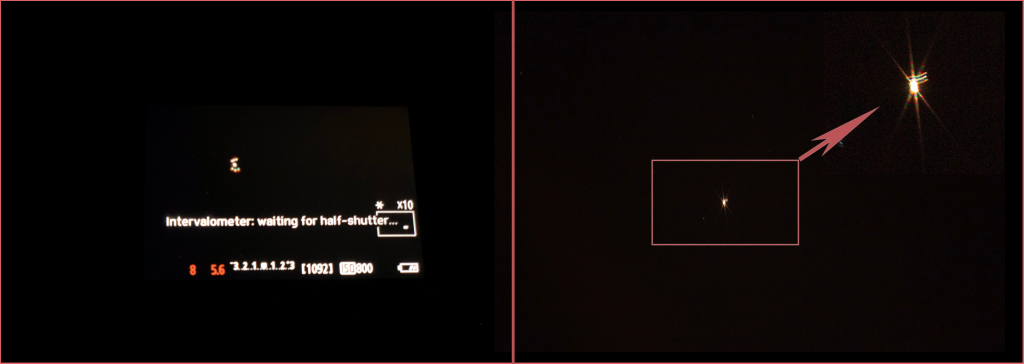
In the comparison image you can see three small “wave” shapes in a row. After focusing, those subtle details became noticeably sharper. Considering all the small error sources in a typical imaging setup, the improvement was surprisingly strong.
I’m very happy with the result. After a few sessions it’s clear that with a Bahtinov mask I can reach accurate focus more reliably — and that directly translates into sharper stars and a better final image.