Over the years I’ve photographed planets, the Moon and deep‑sky objects with dedicated gear — but this summer I wanted to step back and learn the basics again: what can you do with “just” a phone, and how far can you get with careful technique?
To prepare, I practiced in Stellarium. I made a simple check‑list that guides me to recognize the main constellations and the brightest stars, and to keep track of directions (north, east and south) from the observing site.
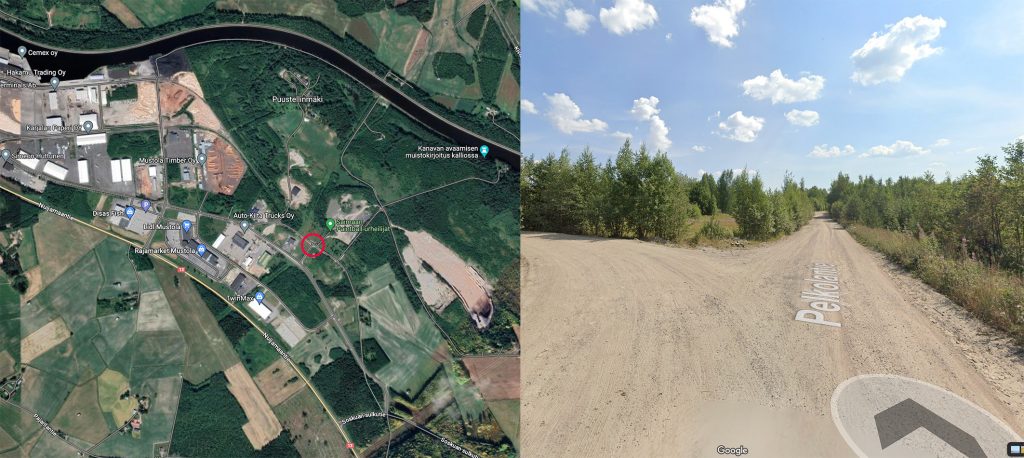
After a few practice runs, the forecast finally promised a clear night. I chose a familiar place with fairly unobstructed views to the north, east and south — a good starting point when you’re trying to match the real sky with a planetarium app.
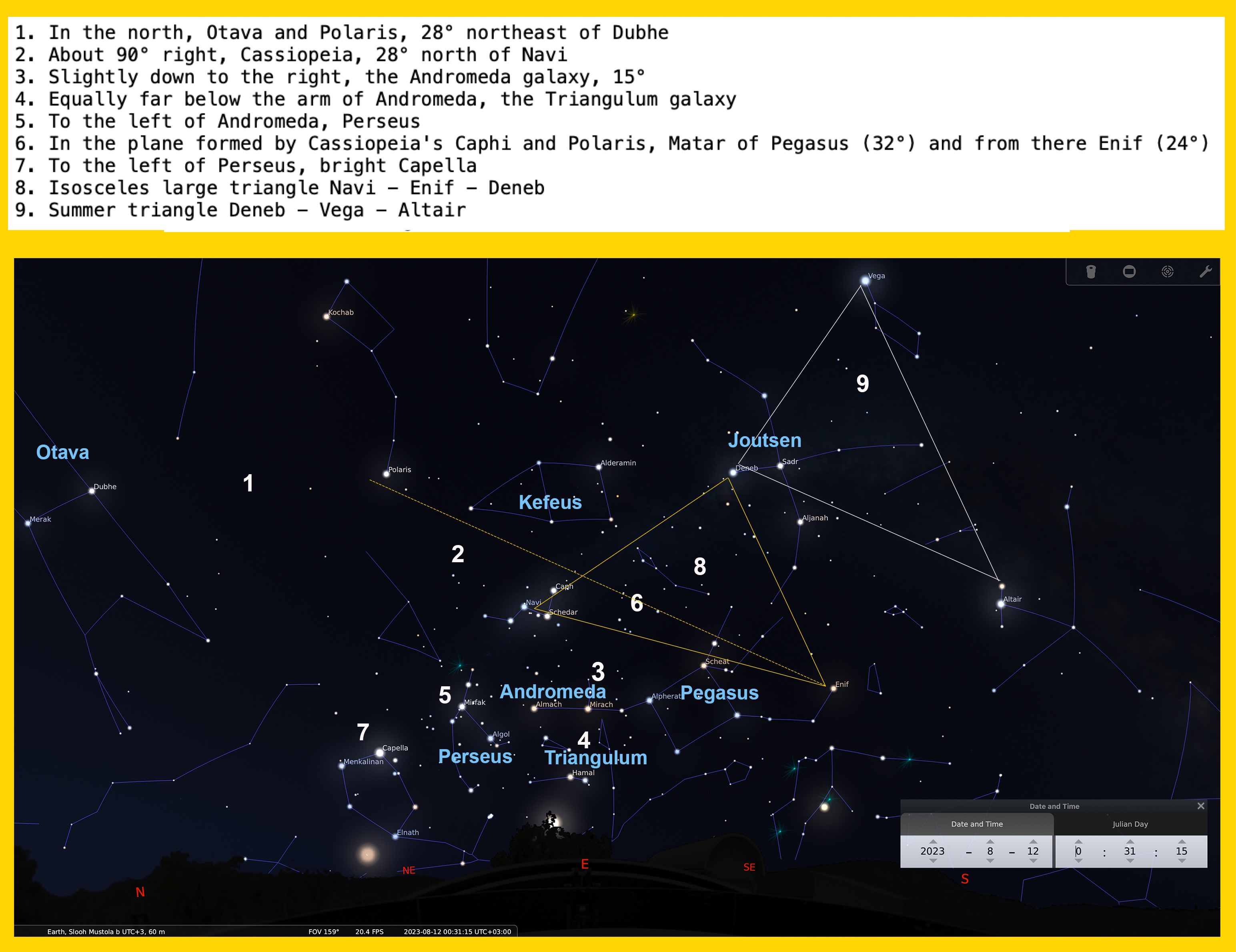
On the first evening clouds arrived just before midnight. Still, I managed a few quick reference shots that confirmed the brightest stars, and that alone was useful: it verified my orientation and the phone’s field of view.
I decided to image with an iPhone 13 Pro. For the wide sky I used the NightCap app. I left zooming aside — cropping later in post‑processing is usually better than digital zoom in the field.
NightCap exposed for about 10 seconds while automatically adjusting ISO and other settings. I tried to keep the horizon roughly centered so the final frame would include as much sky as possible without a large empty area.
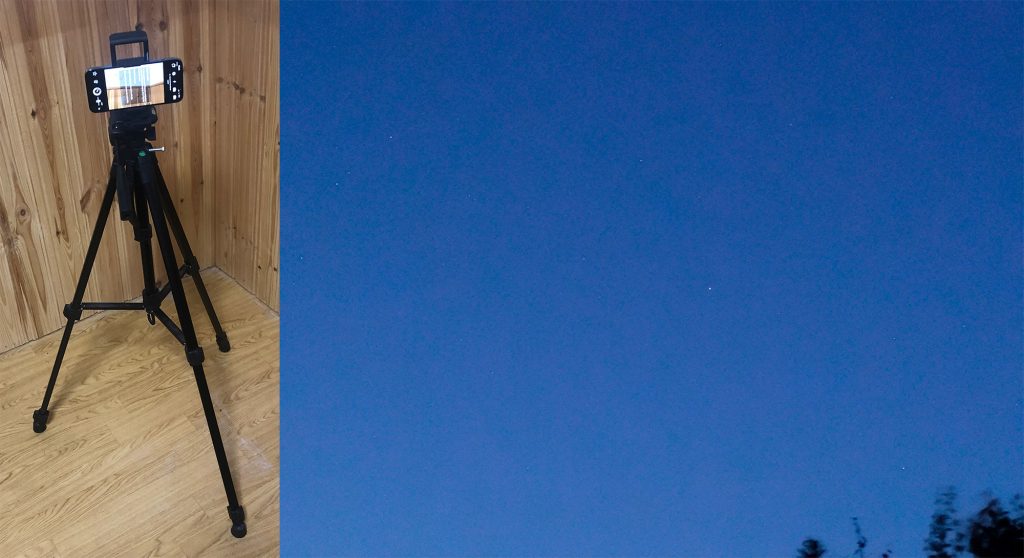
At one point I also tested the phone’s tele lens (one frame only). The tele camera gives a narrower field and a different star density impression, but it is also more sensitive to shake — a solid tripod becomes essential.
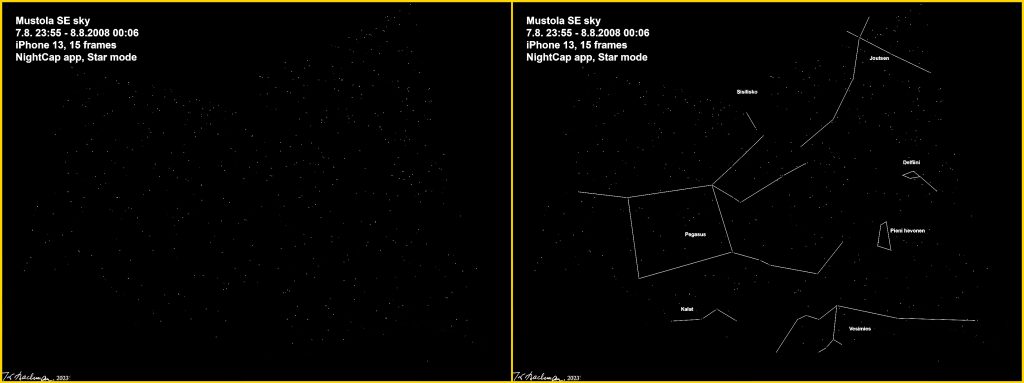
As you can see in the images, the sky still had a blue glow (late summer twilight), yet surprisingly many stars were recorded. The phone can capture far more than you expect — as long as you keep it stable.
Combining frames into a panorama turned out to be difficult. The stars are small and the parallax between frames is tricky, so it took me several hours and still didn’t become as seamless as I had hoped.
Even recognizing constellations from the photos required care. Stars are faint and the patterns subtle, so I compared the images carefully against Stellarium’s reference view.
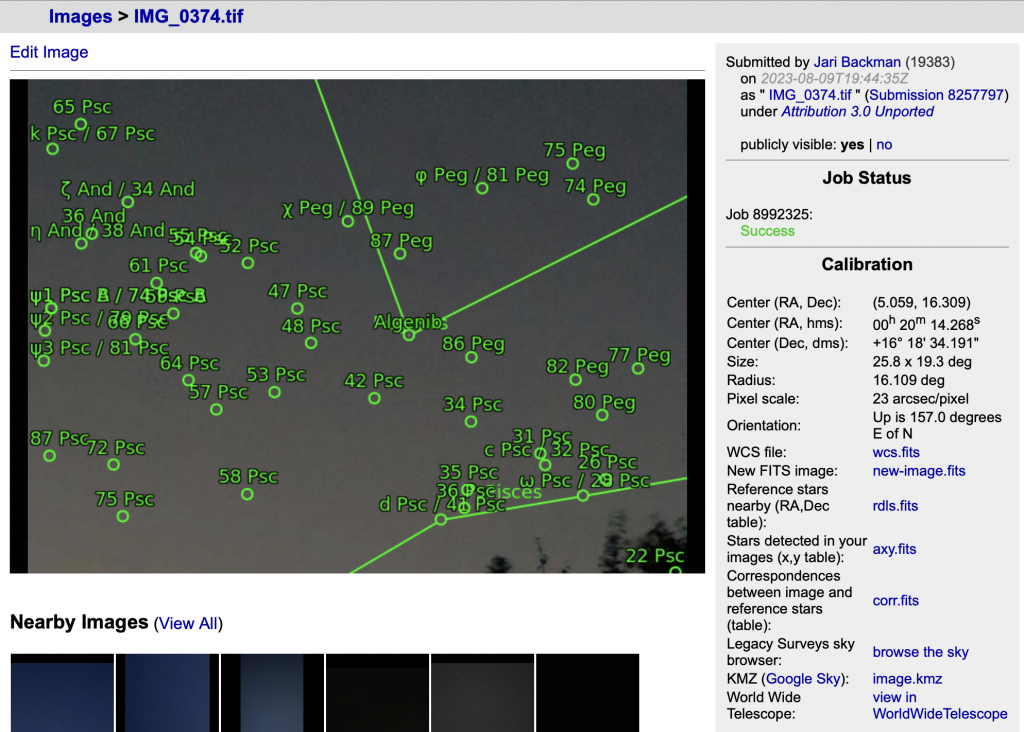
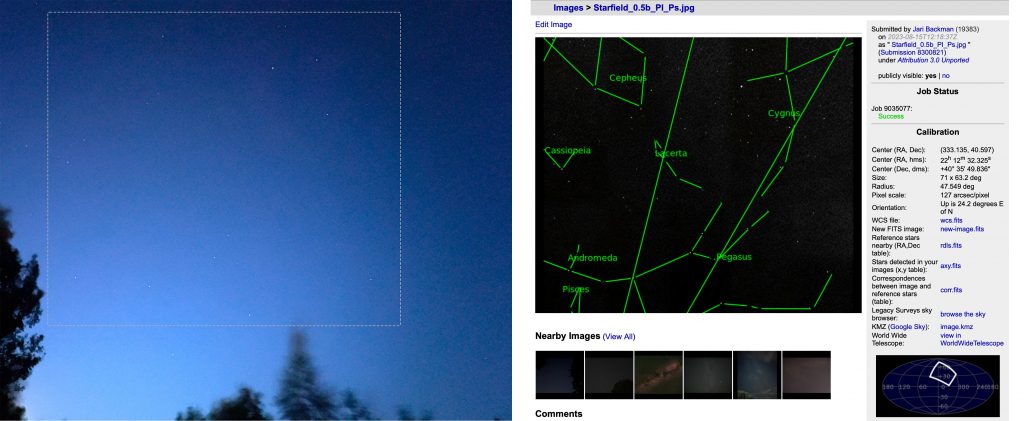
I also shared a telephoto test frame in Nova’s WhatsApp group. We solved the sky coordinates quickly with Astrometry.net — a very efficient way to verify what you’re actually looking at.
With that, it was easy to see that the phone image covers roughly a 95° field of view. That is close to human vision’s usable field, which is one reason why phone sky photos can feel so “natural”.
I tried hard to spot the Andromeda Galaxy visually, but without luck. It is near the limit of naked‑eye visibility from many sites, and the summer twilight didn’t help.
The main lesson was familiar, but worth repeating: setbacks are part of observing. If something doesn’t work, you don’t just pack up — you adjust the plan and try again.
Preparation helps. If you arrive with even a rough plan of what you want to identify and photograph, the session becomes much more productive.
A smartphone camera works surprisingly well for amateur‑level night‑sky photography — but it has limits. For the best results you need a proper tripod, and you should expect to do at least some post‑processing.
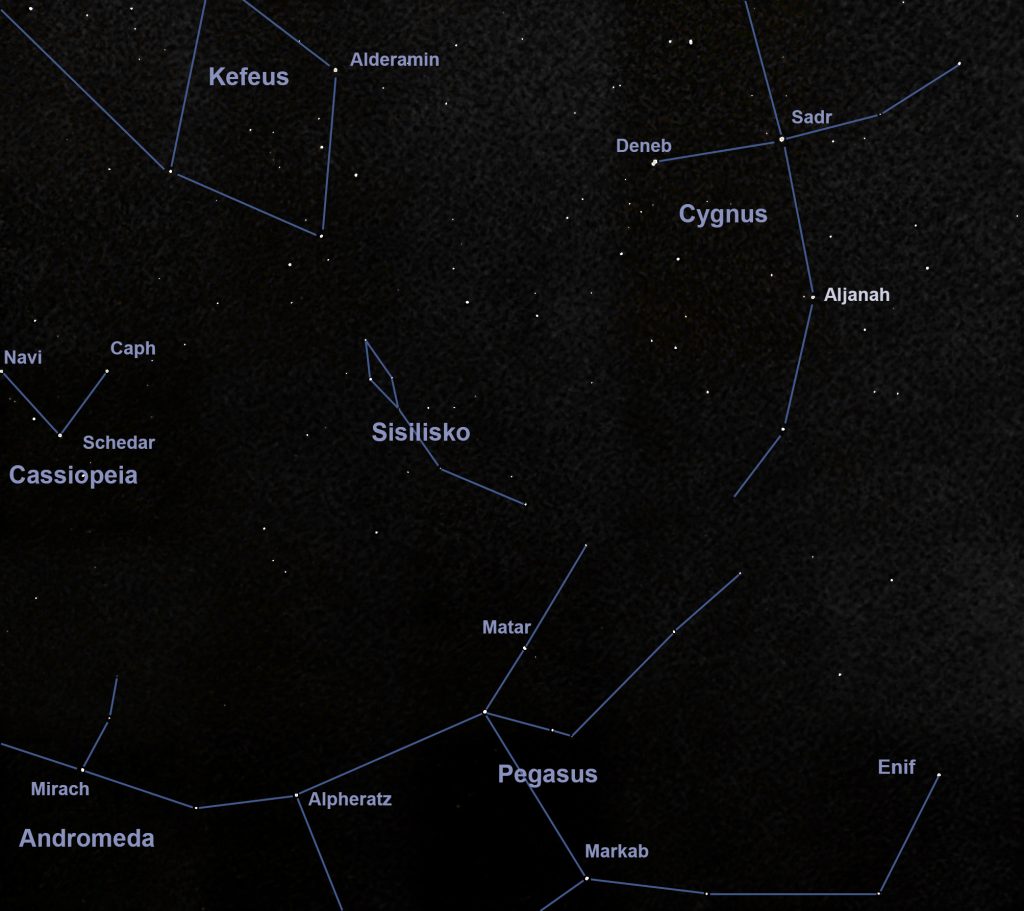
Basic image processing can be done with tools that come with the computer, and there are also excellent guides online for anyone who wants to go deeper.
PS. The autumn sky (and darker nights) will make this kind of photography much easier. I’ll definitely continue practicing when the season turns.