


Background
I (Jari) have been interested in space all my life, I made a presentation in the school about the Moon just prior the moon expeditions and really wanted to know more about stars. I had purchased a cheap telescope, which I gladly returned after finding the many manufacturing flaws. The Nordic weather did prevent me (or I did not have enough perseverance and a proper councel) to make further learning about stars. Let's face it, when we have warm enough, the sky is too light and when the sky is dark, you are feeling chilly all the time. And I had been using my time for something different. So, when my retirement was looming, I had decided to make one last attempt on astronomy.
In April 2019, I made my first efforts to make some study how to do astronomy. I looked on different amateur telescopes, explored how to take images with my Canon D600 and downloaded many apps for my Mac and iPad. Also, I tried to find a good sighting place in the vicinity where we live.
Finding Slooh
At those times I learned about Messier Marathons and figured that it could be a good start: Take an image of all the 110 objects in the sky. It was a challenge, which turned out to be really hard - until I found Slooh. I also started to make my own notebook on the objects on OneNote, which would grow with my explorations.
With the many obstacles, I was thinking that there must be some way to have access to telescopes via the web. And I was right! With an annual cost of $20*, one can access Slooh Observatories with nine telescopes. With that beginner's level you can reserve one five minute mission any time at night. The robotic telescope would then make your observation and process the image for you. Also, you are able to follow (robosnapp) five other missions reserved by your colleagues. The image you get from the mission is ready for use, though the PNG-type file has its limitations.
Quite soon I found that with an annual $100 dollar investment one can do the same on the 'apprentice' level, but you get unprocessed (but importantly, calibrated) telescope image files called (FITS files). It means that the telescopes usually provides you with four files, each monochromatic, taken through different lenses. One luminosity (L), one red (R), one green (G) and one blue (B) image
Slooh currently has three observatories situated in places where the conditions for astronomy are as best they can be. Tenerife Observatory is situated on the volcano Teide at the altitude of 2372 meters. The largest telescope has a mirror of a half a meter (20 inches). The second observatory is in La Dehesa in Chile at an altitude of 1450 m. Slooh installed here in February 2020 a new 17 inch telescope that has provided some amazing views. The third observatory opened in 2025 in Australia in Coonabarabran and has a similar 20 inches telescope as in Tenerife.
And then here the fun starts as you need to process yourself these monochromatic images. Slooh has its own processor with excellent manuals and there are many programs available for astrophotography, some free and some commercial products. I decided to go with Pixinsight as it offered a three month testing using the full program. And after becoming familiar with it, I was ready to pay the $200+ price for the program.
But wait, after a time I wasn't happy with my Slooh single mission. So I decided to update my status to the 'astronomer' level (how nice that sounded) with five simultaneous missions and five robosnapps. The applied annual fee is $300. So this isn't free, but I still find the costs moderate
Anybody can learn about astronomy - this has happend
As an educator I want to point out the Mission of Slooh, which has a strong educational weight The web site has information about 1000 meaningful objects on the night sky and the guides also educate about various techniques with astronomy. The activities of each member gain membership points, so your internal level of astronomical gravity increases along your work. The members can join various quests that send them in hunting information about objects and requires you to make your own observation missions. Furthermore, members are also requested to file out their observations, which are shared in the chats and alerts on the web site. In accordance with the mission, Slooh provides affordable charges for schools, so the pupils don't have to invest as much as I have done. And boy, if I as a kid could have had something like this in my hands ...
** Member of AAVSO, Ursa and Nova **
And not to mention all the vivid discussions about all the observations that can happen, and which encouraged me to join the American Association of Variable Star Observers (AAVSO), where amateurs like me can assist scientific astronomy by following stars that have changes in their light magnitude.
I also have joined the Finnish astronomical society Ursa and the local South-Carelian Nova.
** Messier's Objects **
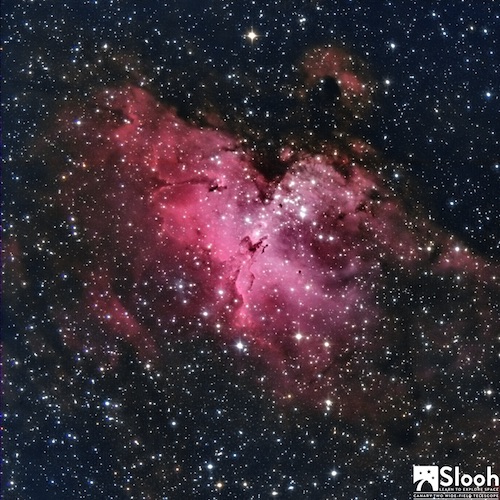
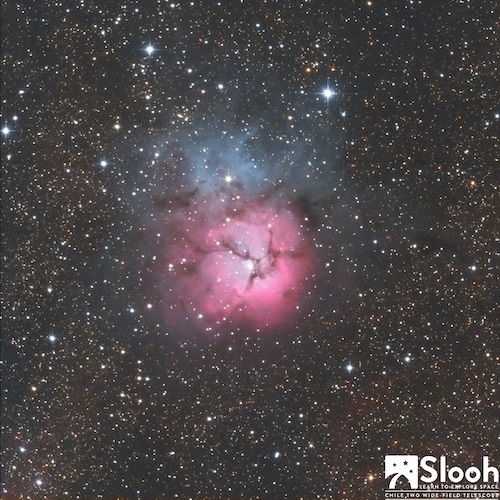
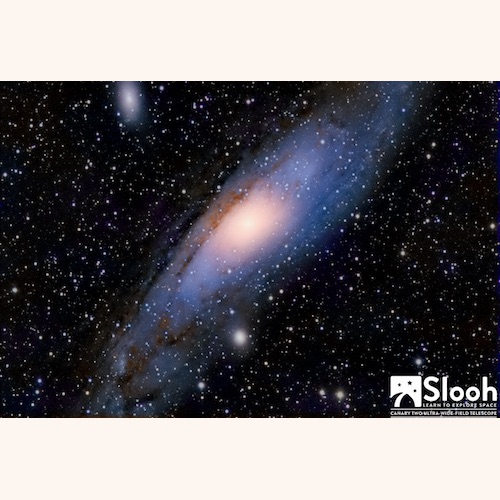
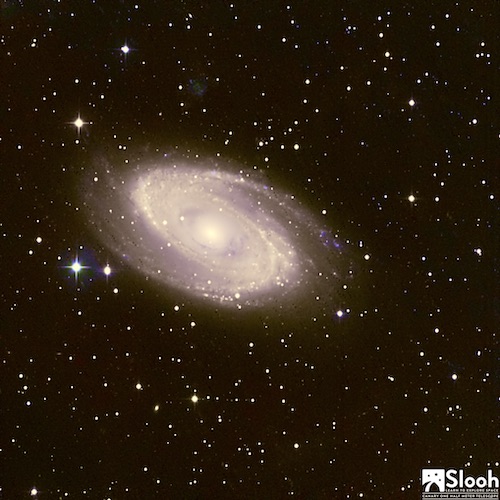
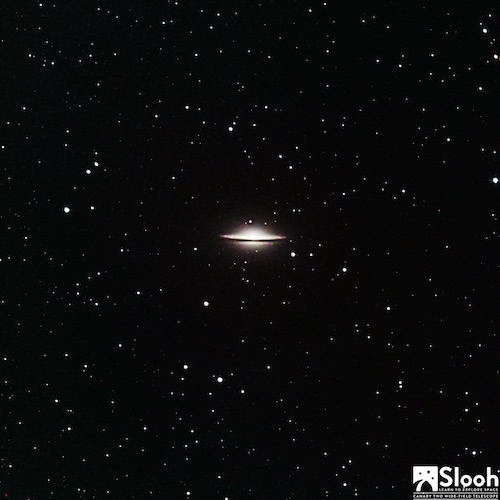
As thrilling as it sounds, my quest to gather all Messier's objects is now over. This 'marathon' took six months, which was possible thanks to Slooh. I have collected ten images on this page, but due to the large file sizes the images are made quite small, though you can increase the image to a 500 pixel width by clicking the image or the name of the image. I also have made a Messier Info page, where the various Messier's objects are described in more details and compared to the interactive sky map provided by Aladin Lite.
** Quests on Slooh **
The most challenging Quests provide us with awesome looking posters, where the images you have gathered in performing the Quest are laid out in a beautiful manner. The resolution is large enough that you might order them as photos or similar
** Night Sky Objects Python program **
If you would like to see when Messier Objects or Caldwell Objects or AAVSO recommended Variable Stars are visible at Slooh Observatories, check the Night Sky Objects program, a Python code I made for this purpose
Slooh Space Ambassador
In June 2020 I was requested to be the Slooh Space Ambassador and gladly accepted. This position is a voluntary effort to get people, especially youngsters, to know about Slooh's endeavours to teach the world to explore space. That is why you may see some postings from me in this direction
** AllSky Cam **

In 2023 I got interested in constructing a Raspberry Pi based sky camera. If you are interested, there is a comprehensive report of the project that was also published in Finnish in the online magazine of South-Carelian Nova
The AllSky Camera has worked without problems and you can check it from our site
** My Own Telescope Seestar S50 **

I had dreamed of own observatory, but our house isn't located in a prime setting with all the trees and some street lighting at about Bortle 6-7 class. But then I saw a fascinating YouTube video. It showed what you can do with a smart telescope that costs 500 USD (in Finland we also have 25% VAT, so we are looking at euro 700+). I got very intrigued and encouraged by my AllSky project, I decided to order one. And what a wonderful piece of equipment it turned out to be.
I also joined a group of amateur astronomers to custom up the capabilities to make equatorial base, schedule observations, do mosaic patterns etc. The Seestar_alp changed very much the use of the telescope.
In the image above you can see it in operation on the roof of our porch, when it usually takes only some minutes to get this five pound telescope ready for observations. With a battery bank it easily manages 7-8 hours even in cold temperatures that we have here in Finland. Yes, it also has an internal heater.
Here is the English translation about my Journey to own and use Seestar in our Club's web magazine
I managed within few months to properly observe asteroids and comets in order to receive an official Minor Planet Center Observer Code "M65" and we have named our place the Mustola Observatory. There are quite a lot restrictions to see the sky, but one still can see above the altitude of 30 degrees to the East, South and North.



Back to our home page