My astronomy hobby finally gained momentum in my retirement days when I found the US
Slooh remote telescope community. Although personal contact
will be less, professional technology, which can be booked in advance, ensures both a great result and a normal
night's sleep.
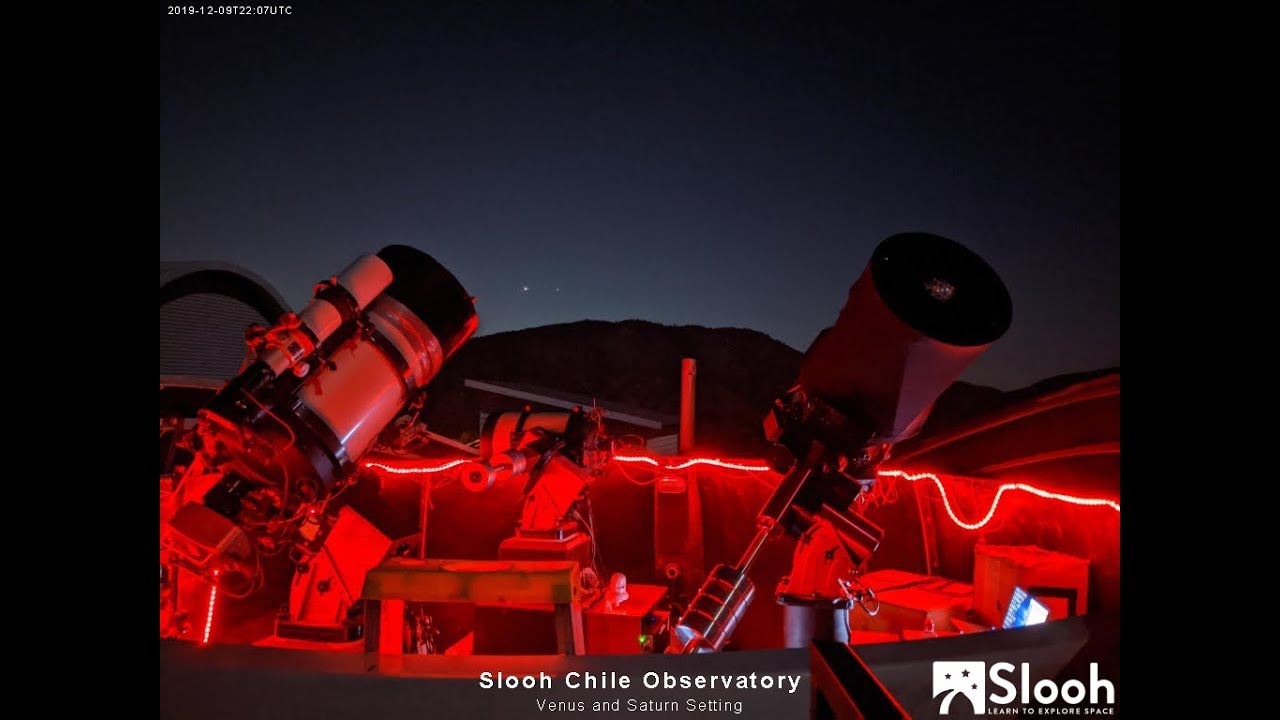
Slooh currently has three observatories. In the Canary Islands, Tenerife, there are six telescopes. In Chile
near the capital Santiago, there are four telescopes in the La Dehesa mountains and the newest one is situated
in Siding Springs, Australia. The observatories are located in such a way that, weather permitting, the sky is
being photographed somewhere at any time.
The sub-page guides below lead you to the different features of Slooh and shed more light on the technology,
astronomy and our experiences.
Slooh telescopes
Slooh telescopes are solid professional work and each is worth tens of thousands of euros. Slooh has
patented its remote operation technology, which guarantees a ready-processed image immediately after the
observation is completed.
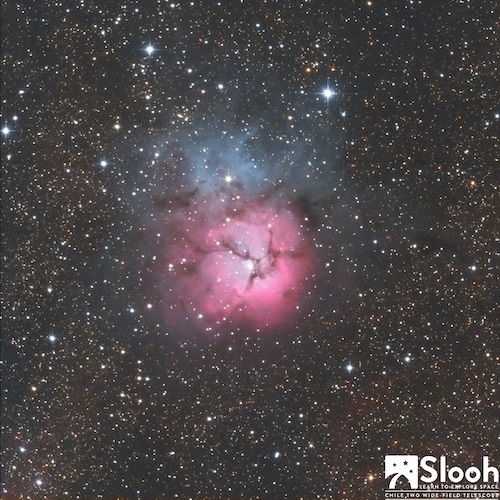
Through Slooh, I learned about LRGB photography, filters, and the basics of image processing – at the same
time, I gained confidence that the hobby is worthwhile.
Slooh encourages members to show their observation results
As a teacher myself, I want to strongly emphasize Slooh's educational goals. And the main target group is
schoolchildren. The site has separately discussed 1,000 significant celestial objects and the guides also
discuss astronomy techniques. In addition, members receive membership points for their hobby and move up within
the site. Members can participate in tasks where they gain deeper knowledge about objects in the starry sky and
the solar system while being guided to photograph them. Members are also encouraged to upload their observations
to the site, where they will be shared for others to see. This is an absolutely fantastic platform for
schoolchildren to use and I hope as many as possible will realize this.